Arendalsuka: Democracy in 2,000 sessions, 180 venues, 5 days, 190,000 participants ...
A beautiful Norwegian coastal town transforms into a giant open-air democracy festival. What Arendalsuka reveals about the power of inclusive, place-based democratic engagement – and what evaluation professionals can learn from it.

Evaluation's Journey towards the Future, Part 4. It has always been political
Evaluation has never been neutral. Throughout history, the act of assessing has served as both instrument of control and catalyst for justice. This post examines how power, politics and ideology have always shaped what gets evaluated, by whom, and for what purpose.
Evaluation's Journey towards the Future, Part 3. The tributaries that make up our field
Evaluation does not flow from a single source. Like a river fed by countless tributaries, it draws from government accountability, Indigenous wisdom, professional practice, academic research, digital innovation and activist movements.
Evaluation’s Journey towards the Future, Part 2. How did we get here?
From ancient aquifers to modern canals: how evaluation evolved from intuitive human practice into a structured profession. Tracing the currents that carried evaluative thinking from millennia-old traditions into the formalised field we know today.
Evaluation’s Journey towards the future, Part 1: Ancient tributaries
As we chart evaluation’s future, its earliest beginnings continue to shape the field. From ancient Egypt’s Nile governance to China’s imperial examinations, from Indigenous knowledge systems to Athenian civic audits – a vivid journey through five millennia of evaluative practice.
Guest post. Drawing from Complexity Science to do Evaluation: Knowledge to Drive Operational Decisions
"I am going to analyse the data with statistics".
"I am going to apply statistical thinking to
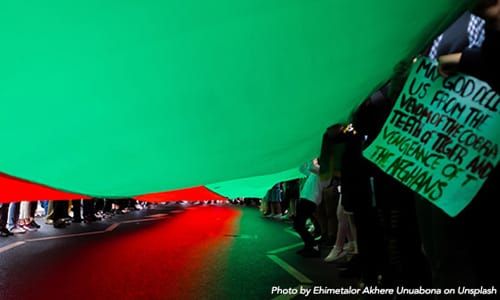
The Power(lessness) of Evaluation: The case of Afghanistan
Thanks to more than 60 evaluation reports over 13 years by the Special Inspector General for Afghanistan Reconstruction (SIGAR), we